Mix feed, air incorporation, cooling, dispensing and hygiene work together. Different versions allow different control of these stages.
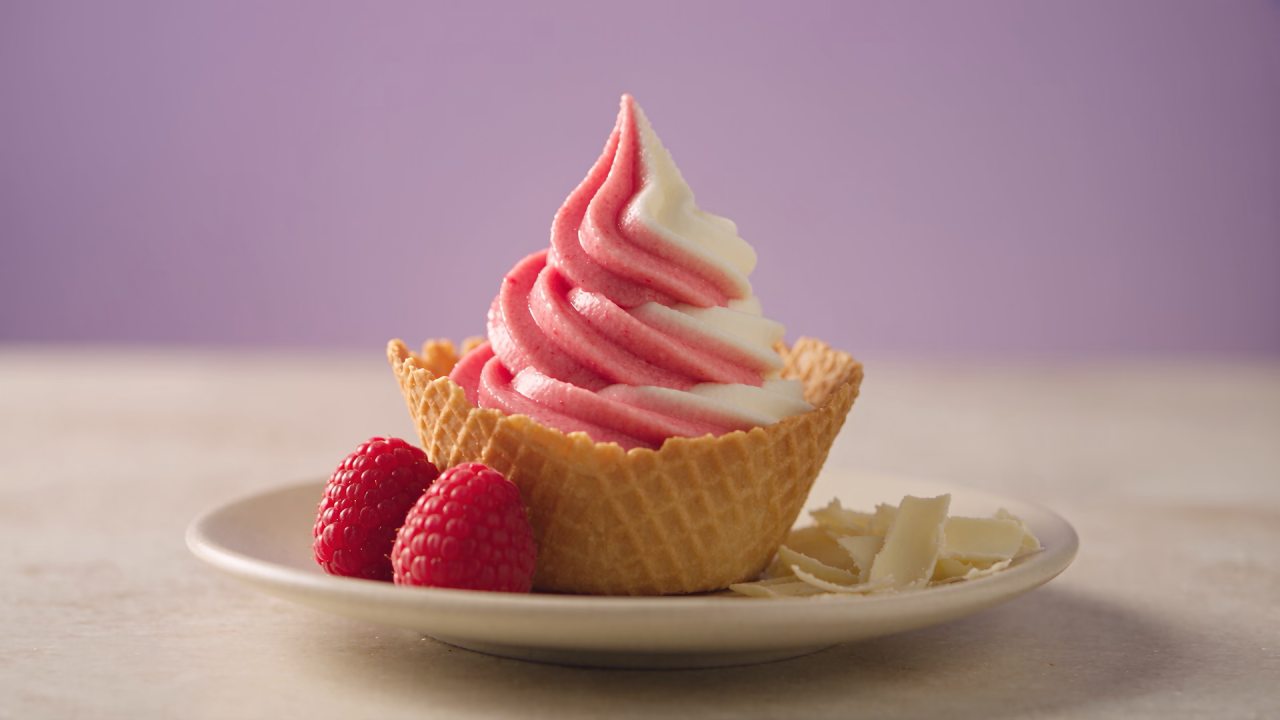
Raspberry and vanilla. A gentle twist.
Control and monitoring
ECOS
On EASY models, you select settings using five touch keys on a multilingual colour display. The settings available depend on the machine configuration.
On the SHG-M 150 and SHG-M 250, staff use the touchscreen to control dispensing and start heat treatment of the mix. On the self-service SELF GEL 1 UP and SELF GEL 1 KOLOR UP, the screen shows guests their choices and gives staff access to diagnostics and portion counts.
On the Giotto 11, you select a preset recipe on the 7-inch touchscreen. Across the Giotto range, staff can also watch step-by-step videos on dispensing, cleaning and maintenance on the machine itself.
The manufacturer's system allows data monitoring and technical support remotely. Suitable equipment, a connection and an access agreement are required. The service itself does not guarantee a specific local service response time.
Giotto · recipes and product preparation
Key assemblies include product settings, level and mix temperature control, the mixer in the vat, the direct-expansion freezing cylinder and the AWB mixer. A frequency inverter controls the drive. The aim is to coordinate cooling and mixing with the chosen recipe.
SEE THE ACTUAL ASSEMBLIES
Technology, also in pictures.
Original visuals from Gelmatic. Each one is explained, and the version you find it on is shown.
Gelmatic · INCODIS 3.0
INCODIS 3.0
7-inch display that shows the next step.
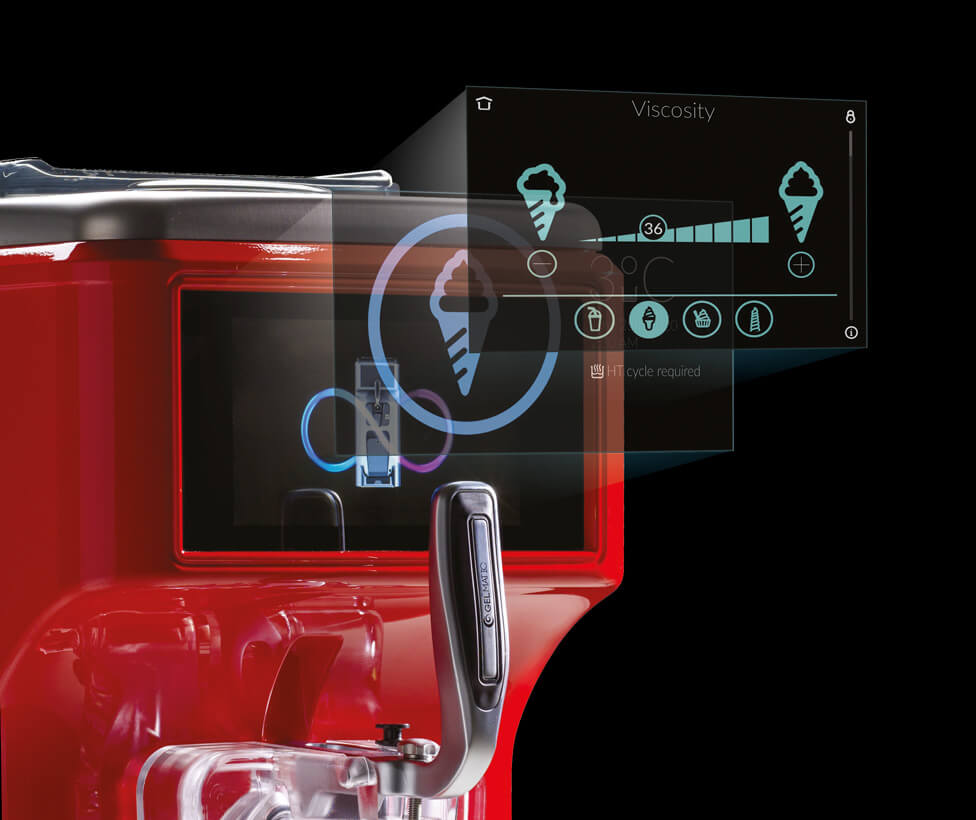
Official INCODIS 3.0 control display: viscosity setting and machine displays. Multimedia instructions help with operation and maintenance procedures. The control version is also shown with each model.
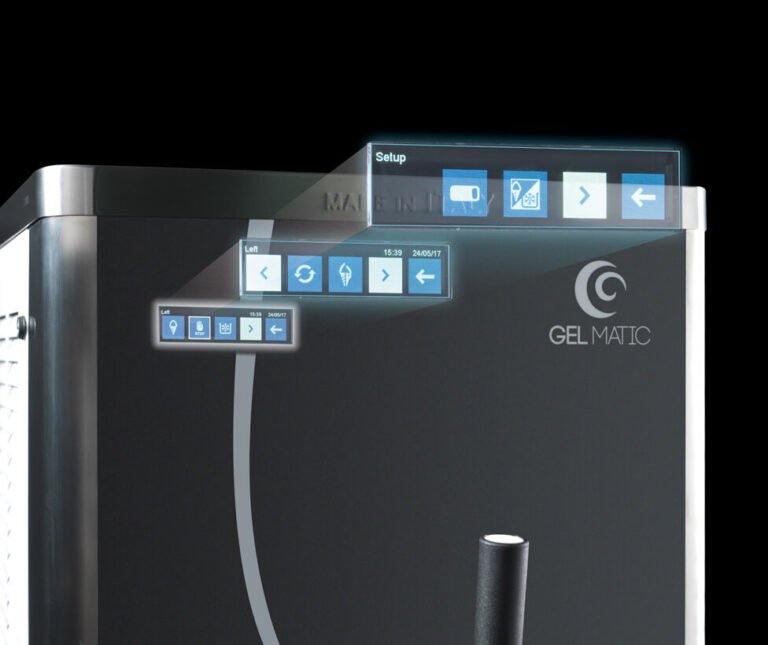
Colour display and five capacitive keys. On EASY models, the emphasis is on everyday operation. Within the same control system, you can choose machines with different capacities.
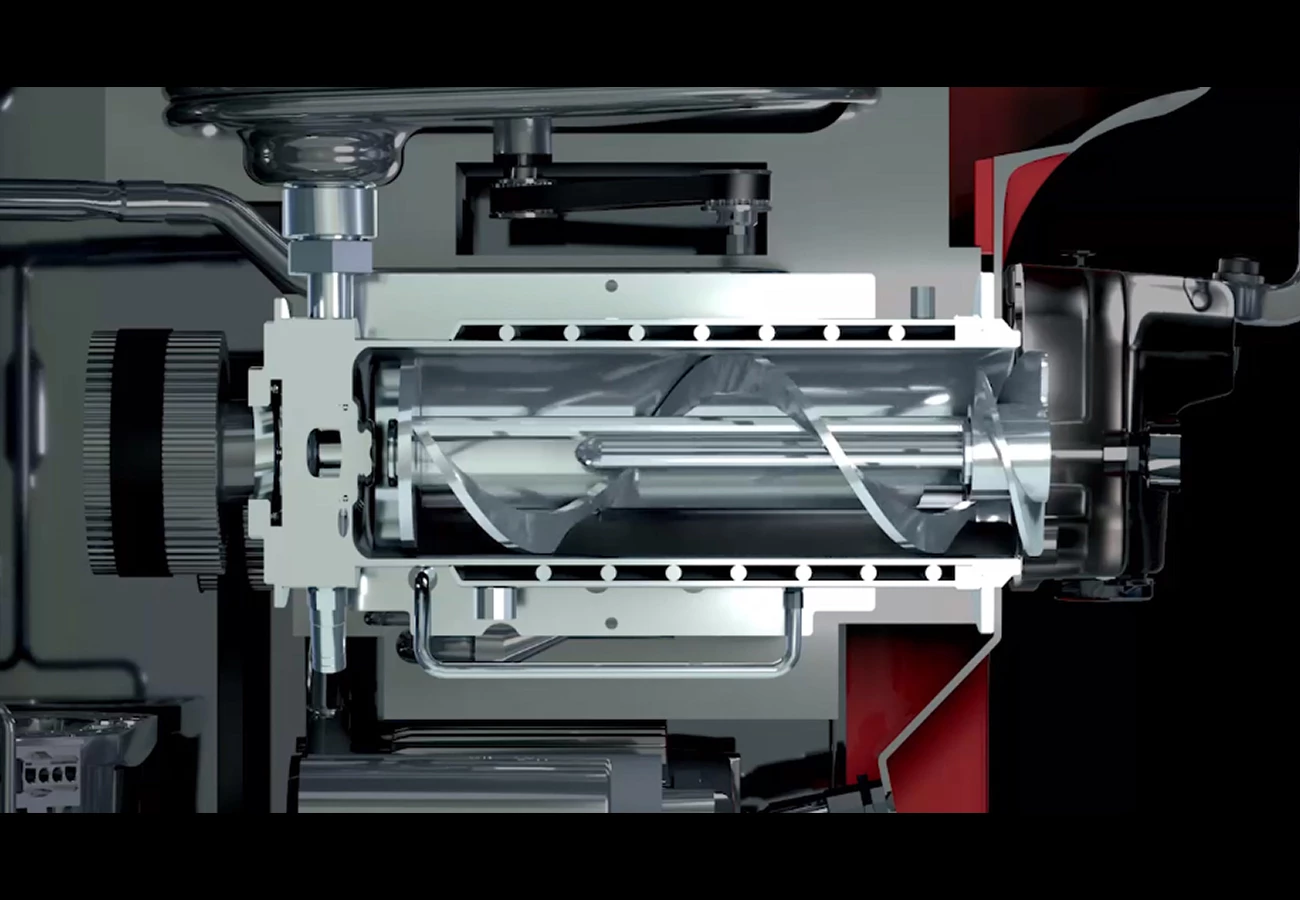
The official Gelmatic sectional view shows the freezing cylinder with direct expansion. The rotating agitator processes the mix in the cooled cylinder; the illustration explains the design, not the dimensions of all models.
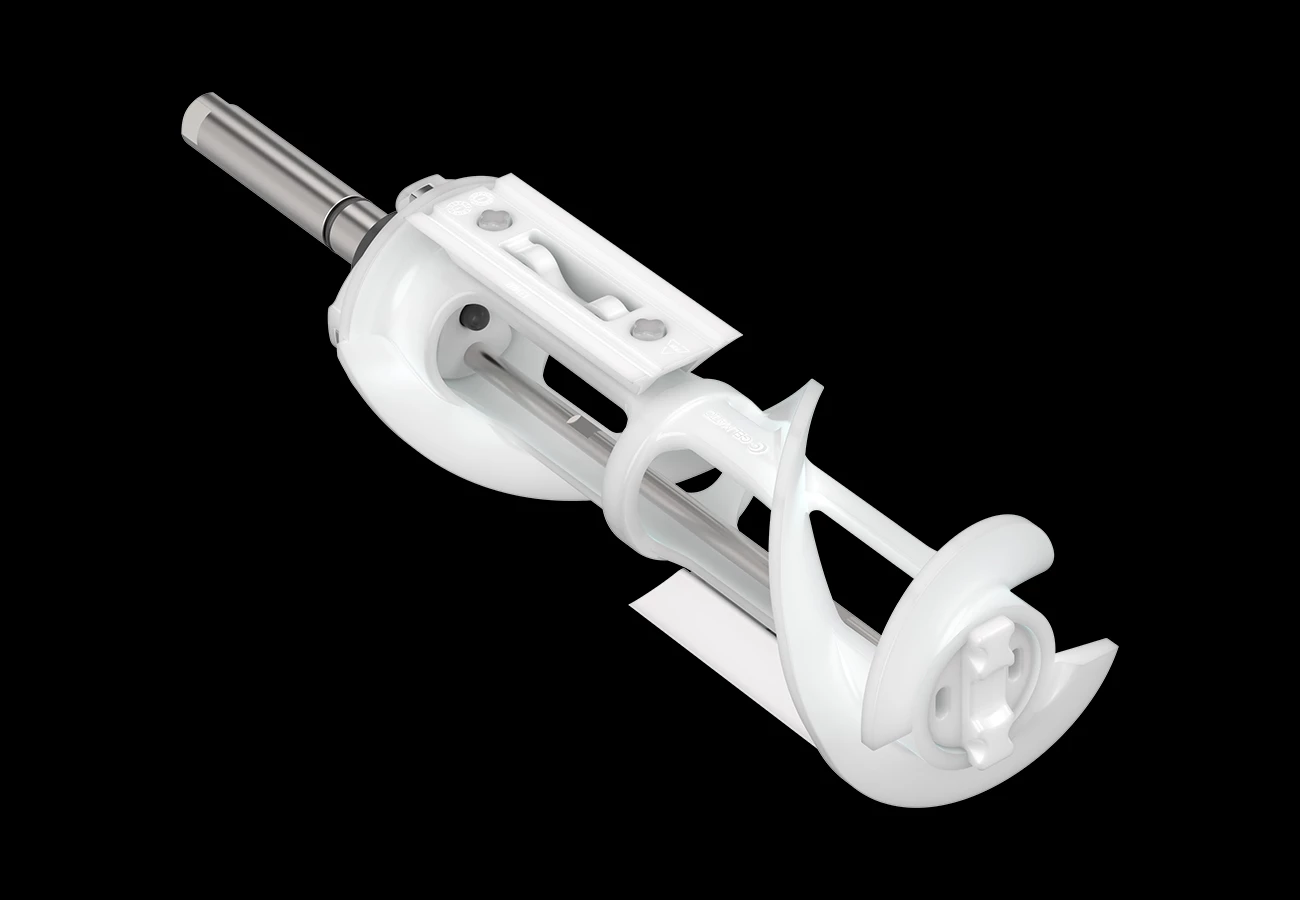
Official AWB agitator photo for Giotto. Mixing, removing the forming frozen layer from the wall and cooling together shape the texture. Settings always follow the model and recipe.
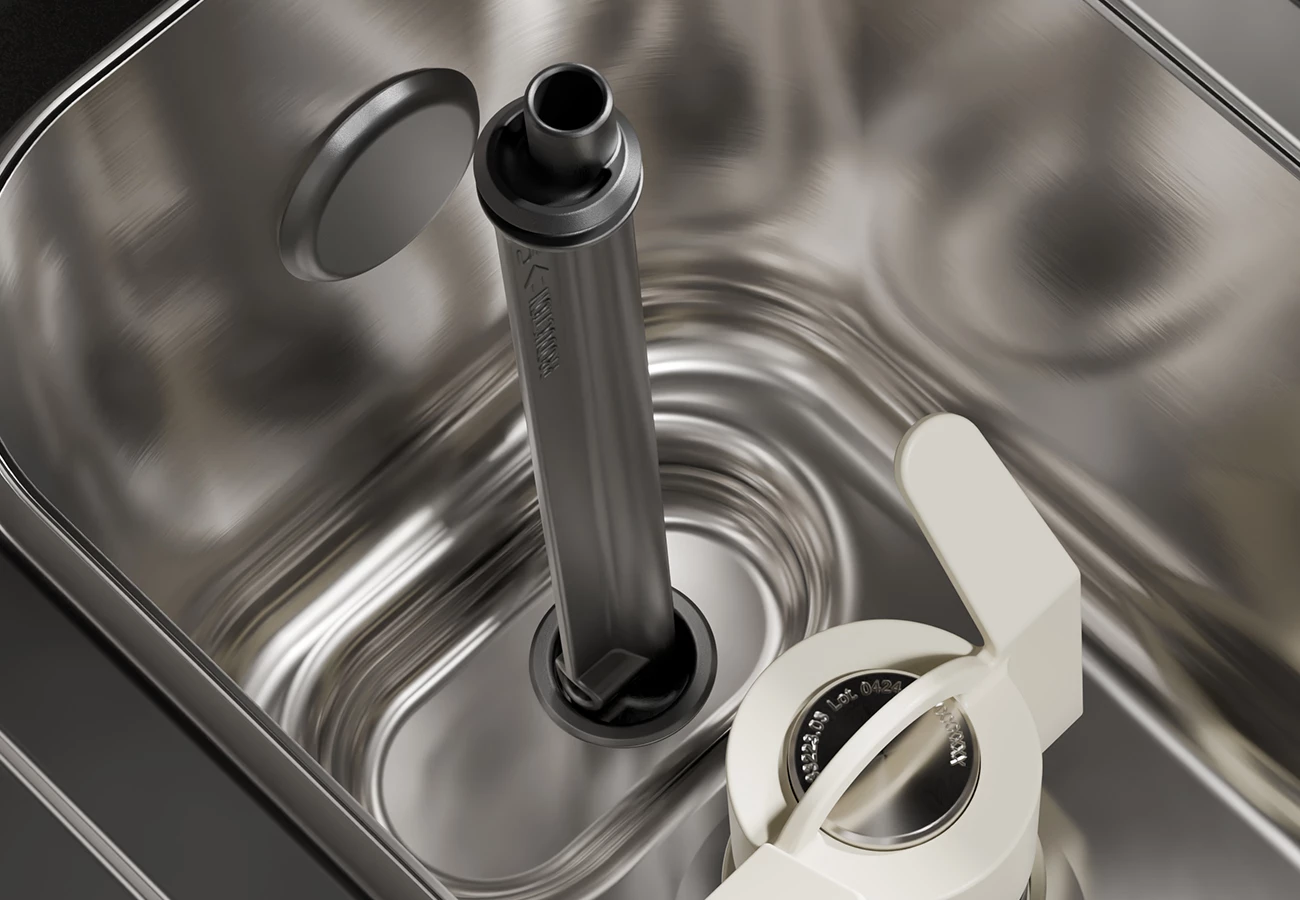
The official photo shows the feed pipe and the agitator in the hopper. In the GR version, the mix passes to the freezing cylinder by gravity feed. The agitator in the hopper has a different role from the agitator in the freezing cylinder.
The photo shows the gear pump assembly for the relevant Standard PM versions. Giotto PM uses a piston pump; when choosing, check the family, not just the PM designation.
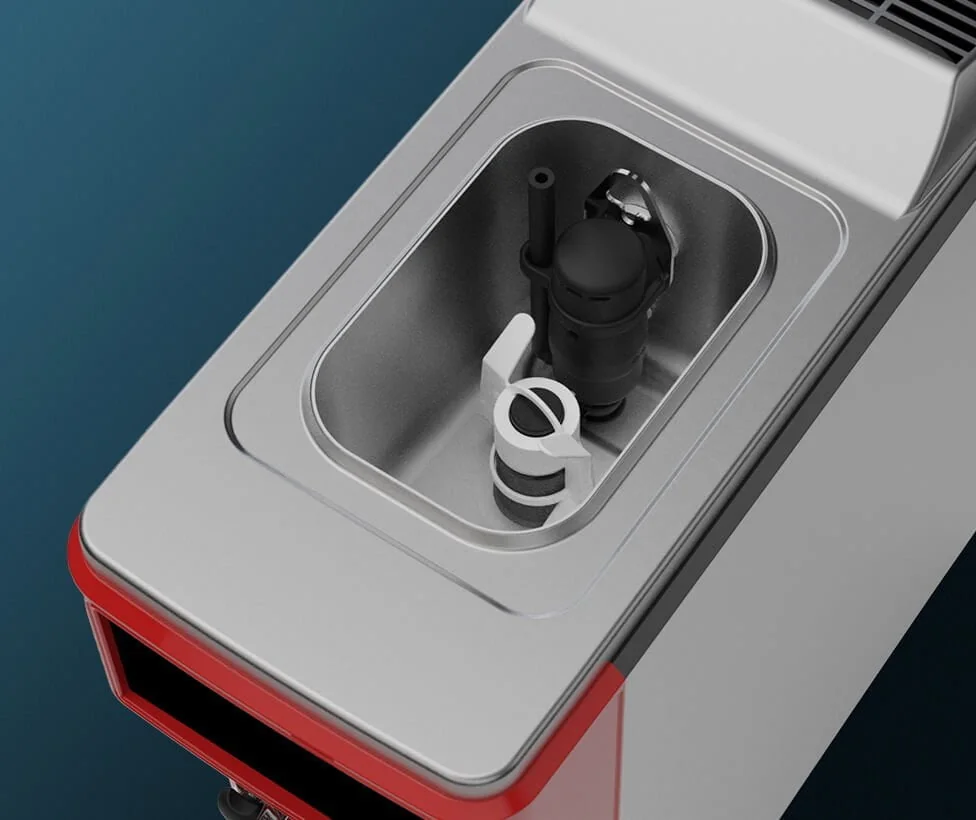
The Giotto 12 PM and DR 14 PM feed mix through a piston pump. The manufacturer’s image shows the arrangement inside the hopper. On the GR versions, gravity carries the mix towards the cylinder.
The mix and air pass into the freezing cylinder through the feed inlet. The system has fewer parts to dismantle. The suitability of the mix viscosity and any particles must be checked.
STANDARD
Gear pump · PM
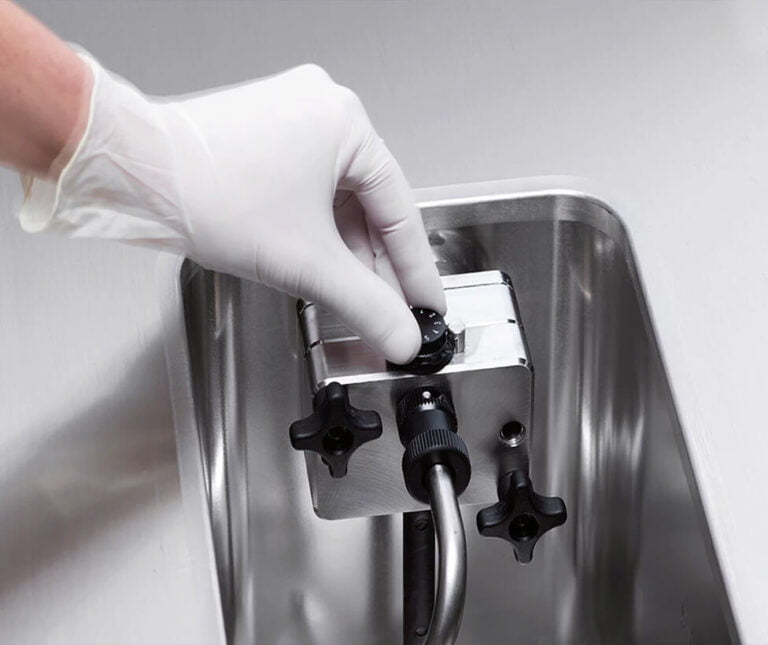
The pump feeds the mix and air in a controlled way under pressure. Gelmatic describes this system as having an inox housing and PEEK gears. It allows air input to be adjusted and delivers a repeatable texture with the right recipe.
GIOTTO
Piston pump · PM
Giotto uses a different pump from Standard. The piston system supports controlled feeding and air input. The same PM ending therefore does not yet mean the same internal technology.
Overrun measures the percentage increase in volume relative to the original mix. To compare gravity and pump feed, use the same recipe and serving temperature.
Tare an empty cup on the scales. Fill it to the rim with liquid mix and record the weight. Repeat with the same volume of freshly dispensed soft serve made from that mix. Level the surface and weigh it before adding sauces or toppings.
If the same cup holds 120 g of mix or 80 g of soft serve, the overrun is 50%. One litre of mix then yields about 1.5 litres of soft serve.
Calculate overrun from your sample
Use the weight of the finished serving for portion planning. Check hourly machine output and the recovery time between servings separately.
HT is heat treatment. Cleaning remains part of the work.
Heat Treatment versions heat the mix, hold it at a set temperature and cool it again. This can reduce the frequency of complete dismantling within the manufacturer's prescribed regime. HT is not a function of every machine and is not the same as automatic mechanical washing.
For a specific model, check the time-temperature programme, instructions in the event of an interrupted cycle, permitted intervals, dismantling of the dispensing assembly and pump, and the prescribed cleaning agents. GTECH Healthy helps warn of unsuitable storage conditions; an operator response is still required.
Without HT or with HT: choosing the working process
A classic machine without HT is a sensible option when you use a suitably prepared mix and have an organised regime for storage, emptying and cleaning. The EASY series allows straightforward everyday operation. The absence of HT in itself does not mean worse ice cream.
HT helps reduce the microbial load of the mix and can extend the permitted interval between full disassembly. The benefit depends on operation, staff and the instructions for the selected model. For seasonal or occasional use, it is therefore not selected automatically.
On models equipped with HT, the mix is heat-treated in the hopper and freezing cylinder. Follow the instructions for your version for temperatures, cycle times and cleaning.
Giotto adjusts mixing, cooling and air incorporation to the recipe. Presets allow different temperatures and densities: a lighter drink for a straw, creamy soft serve or a firmer ice cream. The PM pump is positive displacement, GR uses gravity feed. Different recipes require the appropriate mix and settings, and changing product also requires the correct emptying and cleaning procedure.
What do you want to serve
Test family
What you need to know
Soft serve, frozen yoghurt and different textures
Giotto 11 / 12 · one flavour; Giotto 21 · two + mixed
Alternating preparation of different recipes. RPC for soft serve does not confirm beverage preparation speed.
Frozen coffees, fruit drinks, cocktails or shakes
Giotto DR 14 GR / PM
Dedicated version for drinks. Output in ml or l/h; check the recipe, especially sugar and alcohol.
Soft serve or milkshake from the same cylinder
Combi 1 · SHG-M 150 HTP
One freezing cylinder. Does not represent separate simultaneous production of both products.
Soft serve and milkshake from separate cylinders
Combi 2 · SHG-M 250 HTP
Two cylinders. Published separate tests do not prove their simultaneous combined output.
Hotel, bar or ice cream parlour are not, by themselves, a criterion for the model. First select the product, whether you will alternate it or serve it together with another, and the peak volume. Then check staffing, space, connections and cleaning. If you will serve only classic soft serve, additional Giotto recipes may not be needed.
When choosing a machine, compare how many servings it can dispense in a row and how long it needs before the next batch. These GR models use gravity feed and the PM versions use a piston pump.
The DR 14 tests used different serving sizes. In one minute, the GR dispensed 2,800 ml of beverage and the PM dispensed 1,750 ml. When choosing a machine for your recipe, consider your cup size and the interval between orders.
Short series of portions and required recovery time
5 × 100 g in 60 s; recovery 75 s
SDQ · single dispensing
Quantity in one dispense and recovery time
430 g; recovery 85 s
The example is from the manufacturer's current technical table. It does not mean that the machine can dispense five portions every minute without pause. For your venue, we check the type of mix, ambient temperature and expected customer flow.
Air cooling releases heat into the room and requires unrestricted airflow. Water cooling requires a suitable supply and drain. For the Giotto 11, the advantage is the 300 mm width and airflow directed from bottom to top; we check the requirements for top exhaust according to the instructions.
Connected load is not the energy consumption per kilogram of ice cream. Before ordering, we record the voltage, frequency, number of phases, protection, refrigerant and the exact condenser version. The data may also vary within the same commercial name.
Sweet inspiration for your offer.
FROM EQUIPMENT TO PLEASURE
Silky cream. A crunchy first bite.
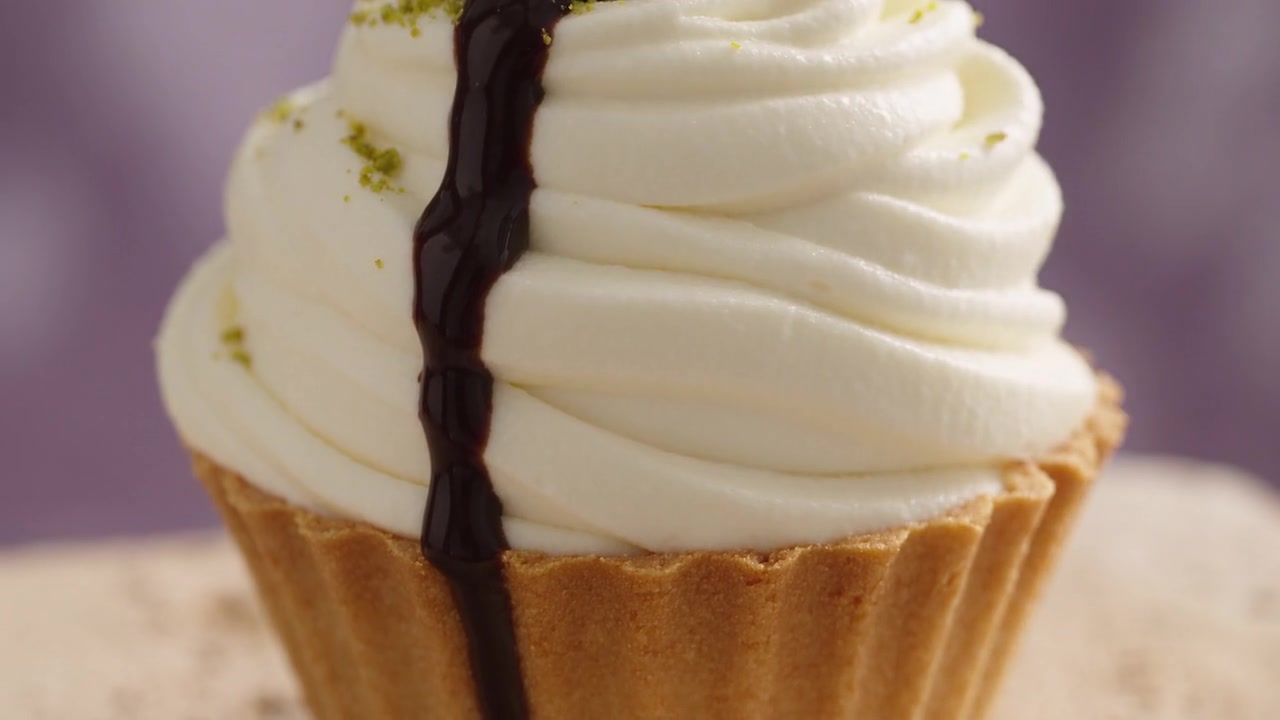
Imagine your soft serve: a delicate vanilla swirl, a glossy topping and a finish to suit your taste. We match the machine choice with the mix and the pace of your service.