C.E.B. IMPIANTI / INDUSTRIAL WASHING SYSTEMS

New series.
Clean container.

Automated washing of IBCs, mixing vessels, drums and small packaging. Choose the technology according to the residue, the type of container and the workflow in production.

C.E.B. IMPIANTIOfficial page ↗
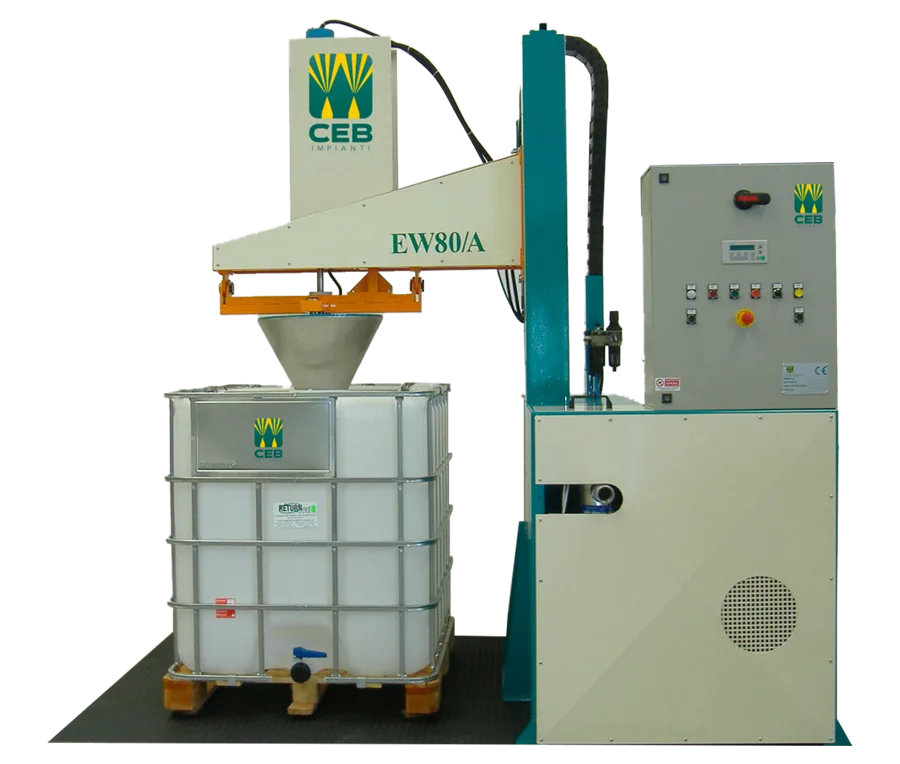
C.E.B. EW80 washing system with IBC container, tilting platform and pumping unit
EW80 / example of an IBC washing station

ABOUT THE MANUFACTURER

Washing as a well-organised
part of production.

C.E.B. IMPIANTI is an Italian manufacturer that has been developing and producing automated systems for washing industrial containers since 1997. The programme includes standalone washing stations, brush systems and lines with multiple sequential processes.

Applications range from the production of paints, resins, adhesives, silicones and printing inks to packaging refurbishment. The right solution combines access to the inside of the container, the washing medium, residue discharge and container handling. C.E.B. also offers washing validation on the customer's samples.

Manufacturer and technology ↗

PROCESS STEP BY STEP

From preparation to the next use.

Choose a step or follow the illustration. The actual cycle depends on the machine, the washing medium and the residue.

WASHING CYCLE / SCHEMATIC VIEW
WASHING HEADDRAIN
01 / 04

Container preparation

The container is placed and secured. We check the opening, bottom discharge and proper connection to the washing liquid drain.

Illustration of the principle. This is not a simulation of a specific machine or a display of a guaranteed cycle time.

SELECTED SYSTEMS

Different containers.
Different washing methods.

C.E.B. EW80 for washing IBC and open containers

EW80 / WASHING HEAD

IBC and containers with bottom discharge.

The tilting platform helps drain the liquid. A suitable container type has a bottom discharge valve; the manufacturer specifies connections of 1½, 2, 2½ or 3 inches.

EW80 · two different washing versions
Data/S/A
MediumSolventWater / detergent
ProcessWashing, rinsingPre-wash, washing, rinsing
Maximum pressure40 bar250 or 400 bar

Eco, Standard and Long programmes. The manufacturer states an average cycle of 3–5 minutes without loading and unloading; the achieved result and time are verified on your residue.

The /S version is listed on the official site as ATEX. The water /A version has its own equipment options; drying IBC requires an additional unit.

EW80 · manufacturer’s technical description ↗
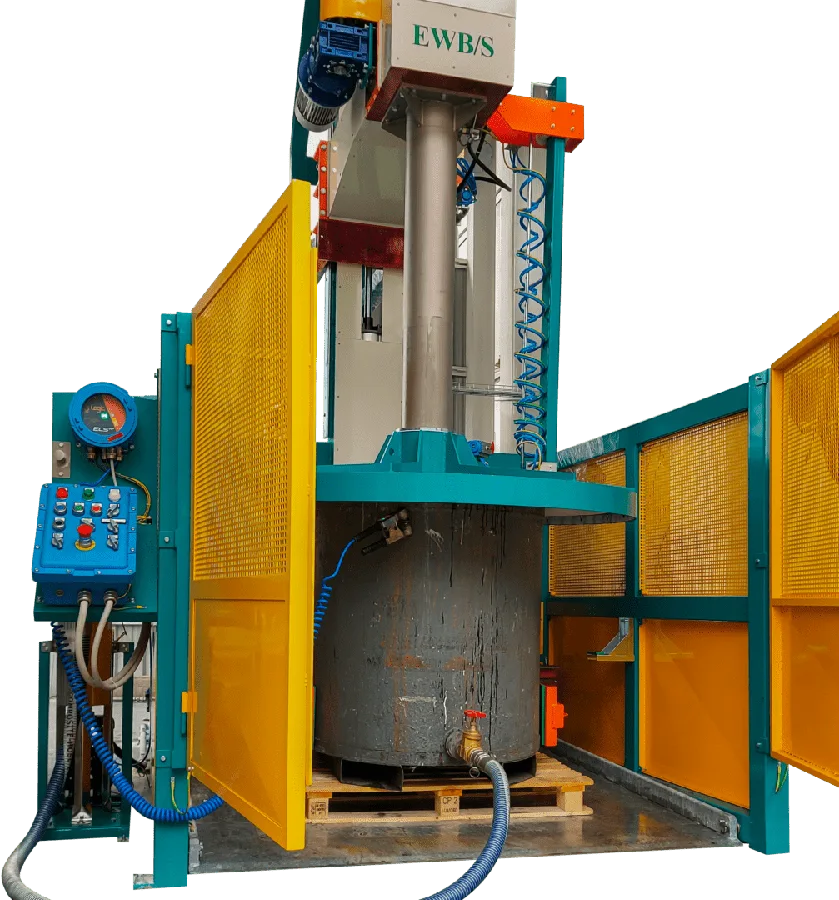
C.E.B. EWB with brush unit for mixing containers

EWB / BRUSHES AND WASHING HEAD

Mechanical cleaning of the container walls.

On suitable open mixing containers, the brushes complement the action of the washing medium. EWB combines the brush assembly and the washing head; brush selection depends on the container material and the adhesion of the residue.

The /S version uses solvent and nylon or stainless-steel brushes. The /A version uses water or water with detergent, standard nylon brushes and a high-pressure head. A bottom discharge valve is предусмотрен.

The related EWEB family is a brush solution. Therefore, we do not attribute the same functions to the technology solely because of the similar name.

EWB · versions and options ↗


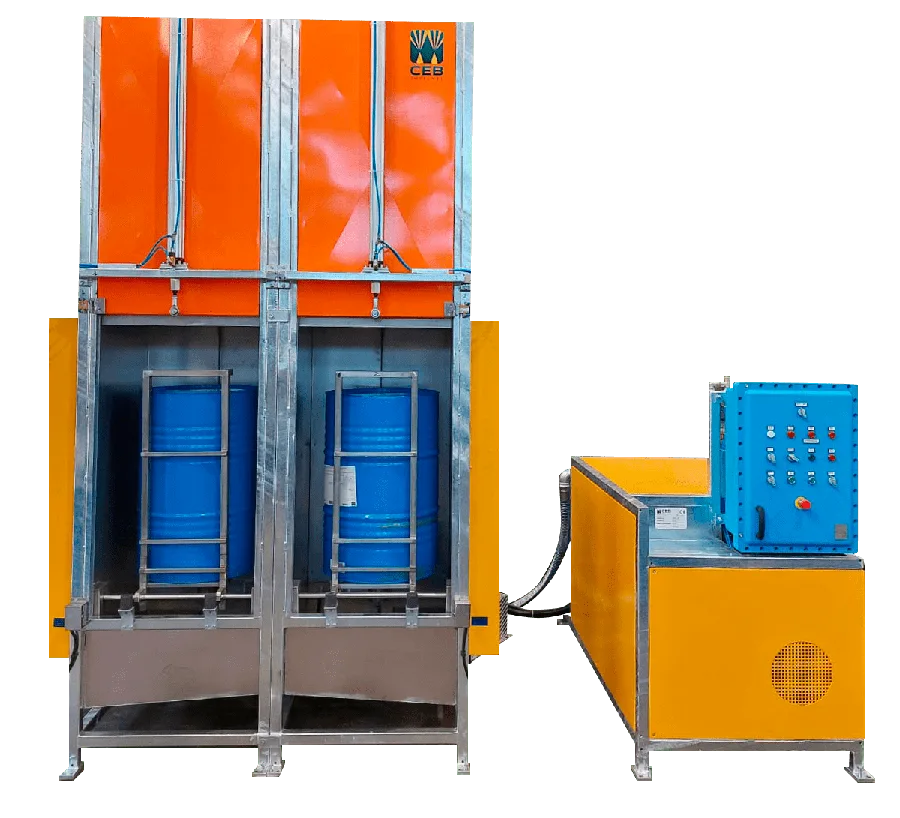
C.E.B. EWEC2, washing station for drums

EWEC / DRUMS

From 25 to 220 litres.

EWEC is intended for metal and HDPE drums with a full opening or a 2-inch bung. The manufacturer states an average cycle of 1–2 minutes without loading and unloading.

The /S and /A washing versions use solvent or water. Adaptations for smaller buckets and connection to the EW80 or EW100 pump unit are available. The extent of the combined equipment is determined in the configuration.

EWEC · drum washing ↗

EWWM / BUCKETS

Several smaller containers in one cycle.

For HDPE buckets and bottles with a capacity of 5–20 l. The programme includes versions for 4, 8 or 12 containers per cycle, internal and external washing with hot water or detergent up to 70 °C, and a construction in AISI 304.

EWWM · group washing ↗

EWC3 / TUNNEL SYSTEM

Washing and drying of smaller packaging.

For buckets, tubs and cans with a capacity of 1–25 l. The tunnel system combines automatic batch low-pressure washing and drying. The washing medium is water or water with detergent, up to 50 °C.

EWC3 · tunnel washing ↗

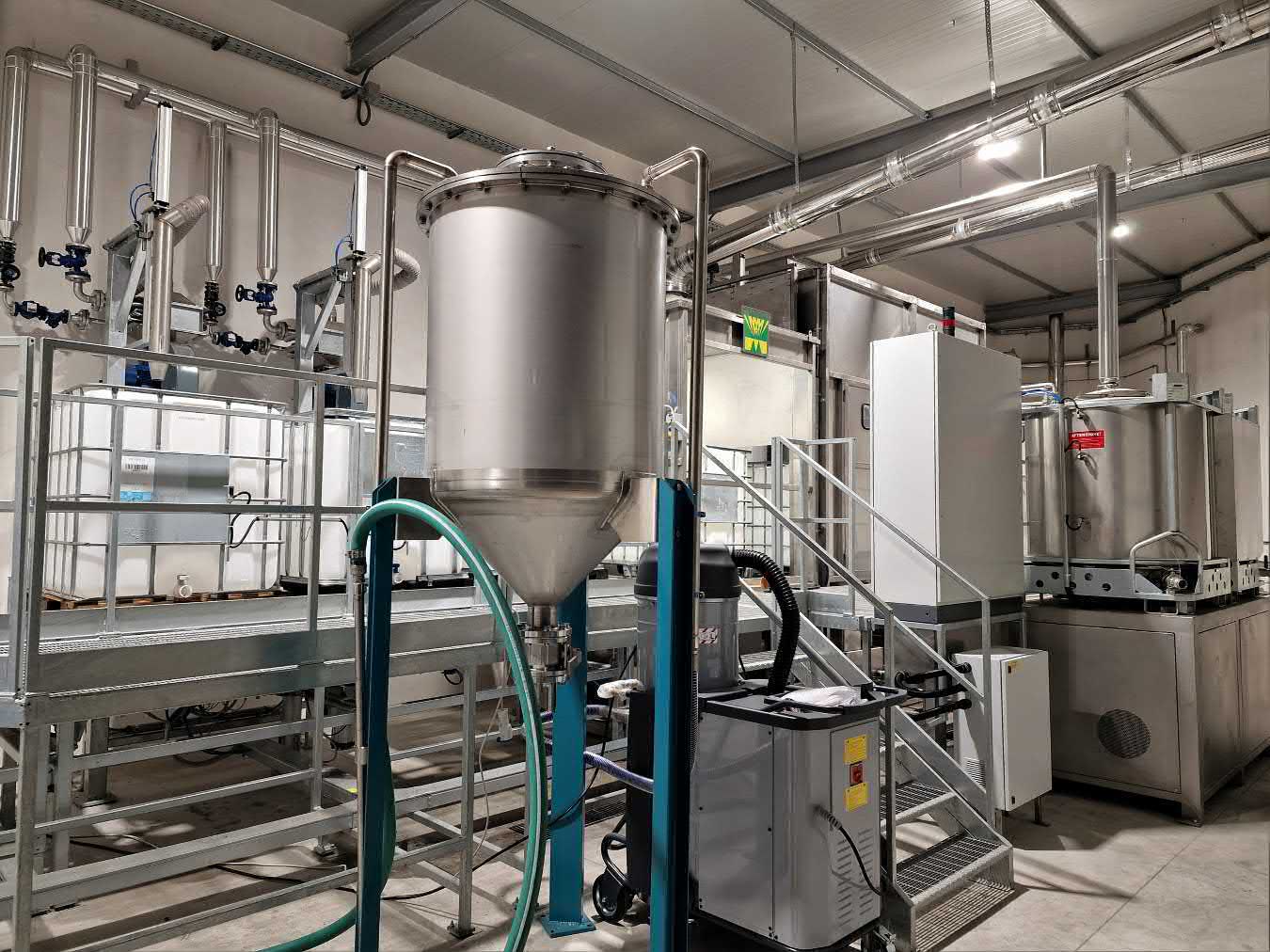
EW1000 / AUTOMATION

When washing becomes a line.

EW1000 connects washing of HDPE or stainless-steel IBC containers with a sequence of workstations. The manufacturer shows an example of a water line with alkaline washing agent for 12 IBC per hour; this is an example configuration, not the general capacity of all versions.

Depending on the design, residue extraction, pre-washing, internal washing and rinsing, external washing, drying and valve testing may follow. The sequence is adapted to the containers, dirt and required throughput.

EW1000 · stations and versions ↗
Example of a multi-station C.E.B. EW1000 washing line for IBC containers
Example of a line version. The number of stations depends on the project.
Containers without bottom discharge and fixed mixers

For open mixing containers without a bottom discharge valve, C.E.B. offers the cabinet family EW-KAB ↗. For fixed containers, access for the washing head and connection to the mixer are important: an example for solvents is GRC ↗, and for water washing GRF ↗.

Filtration, drying and leak testing

Tanks for washing media, filtration, tilting platforms, drying units and leak testing devices are options that the manufacturer includes depending on the project. They are not standard equipment on all models. Start-up, training and maintenance are also defined within the agreed scope.

Manufacturer options and services ↗

PRACTICAL EXAMPLE

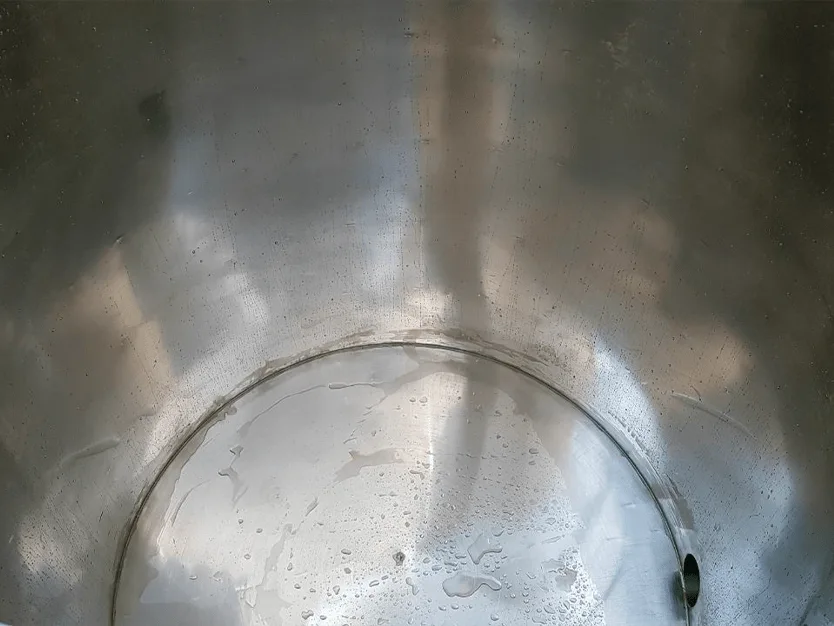
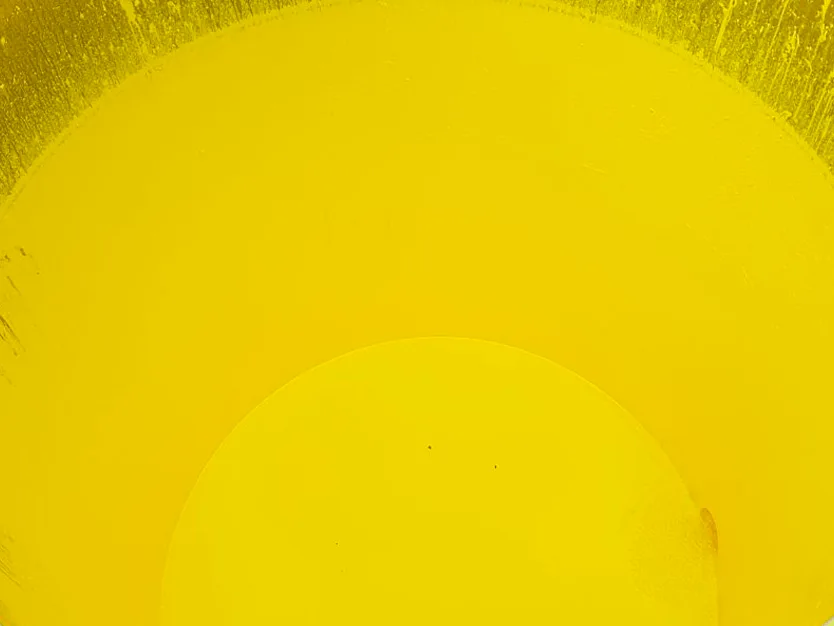
Before washing.
After washing.

Use the slider to compare the photos of the mixing container published by C.E.B. IMPIANTI. The residue, container material and required cleanliness are the starting point for selecting the process.

A sensible next step is a test on your sample. This allows the washing result, medium consumption and actual workflow to be assessed.

Manufacturer example ↗

The application shown does not guarantee the same result for all residues.

Mixing container after washing — C.E.B. exampleThe same mixing container before washingBEFOREAFTER

FULL LIQUID FLOW

Washing and regeneration.
Two connected processes.

In a closed washing circuit, the liquid is collected and returned to the process after suitable filtration. Filtration removes particles; it does not remove dissolved contaminants in the same way as distillation. Some applications require an open circuit and fresh washing medium.

For regeneration of solvents or treatment of water-based washing liquids, we can consider FORMECO equipment. A combined solution requires checking the liquid composition, quantities, materials and transfer method. The connection between the units is defined on a project basis.

Solvents and process water / FORMECO ↗

SEE THE ACTUAL EQUIPMENT

Three views of washing.

Selected clips from the C.E.B. IMPIANTI page and channel. YouTube is loaded only after you choose it in the player.

EWB / mixing containers

Example of brush washing of an open mixing container.

Open on YouTube ↗

EWEC / drums and packaging

Demonstration of the washing unit for metal and HDPE packaging.

Open on YouTube ↗
Even closer: preparation of an IBC container

Existing excerpt from practice: preparation of an IBC and lowering the head. It does not show the full washing cycle.

C.E.B. IMPIANTI catalogue cover

PDF / ENGLISH / 39 PAGES / 3.6 MB

Program and application examples.

Presentation 2023: container types, washing technologies, system components and photos before and after washing. For the current configuration, we use the data for each individual model.

SELECTION FOR YOUR PROCESS

Show us the container and residue.

We start with the type and dimensions of the container, the residue material, the approximate number of containers per day and the desired washing result. We then check the suitable solution together with the manufacturer.

Send enquiry ↗