MAC EVO / condensation
An electric heat pump removes moisture from the air by condensation and uses the recovered heat to reheat the process. Drying is based mainly on air circulation inside the chamber.

INCOMAC / TIMBER DRYING KILNS
INCOMAC drying kilns combine the drying chamber, energy source and software control. From smaller JUNIOR versions to systems for sawn timber, lamellas and beams.
Explore the technology Official page ↗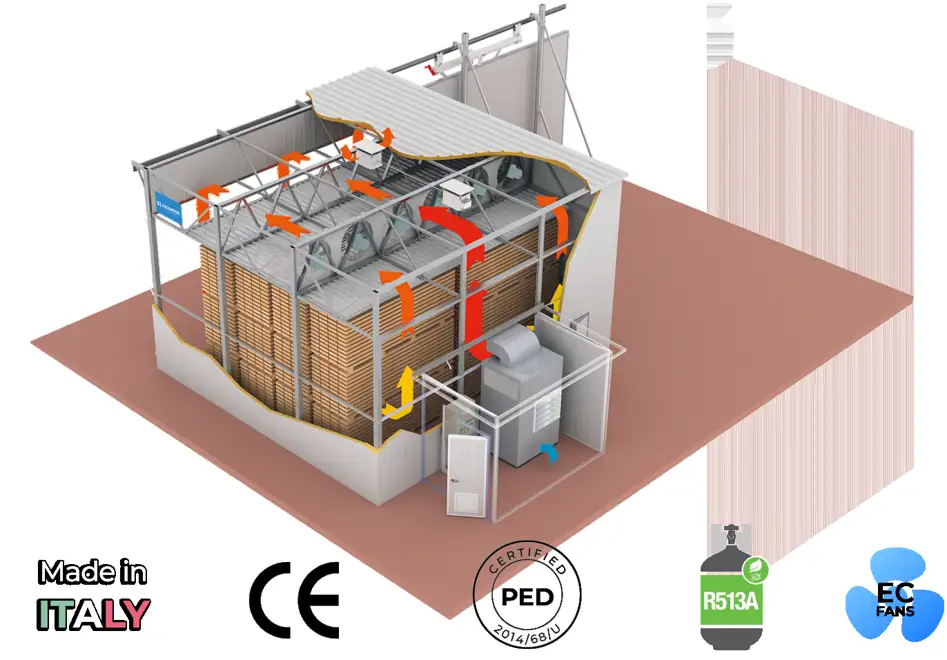
CHOOSE THE ENERGY SOURCE AND PROCESS
An electric heat pump removes moisture from the air by condensation and uses the recovered heat to reheat the process. Drying is based mainly on air circulation inside the chamber.
Moisture is removed by controlled air exchange. ICD uses an external heat medium; TAG its own heating system with a burner. In the current programme these versions are also presented as JUNIOR.
Combines a heat pump and an external heat source. A sensible option when you want to balance available electrical and thermal energy with process needs.
Condensation describes the method of removing moisture; conventional drying mainly uses exchange of moist air. The hybrid version combines both principles.
ANIMATED COMPARISON
We stack the wood and prepare the measurements for the selected cycle.
Principle of operation diagram. The illustration is accelerated; the actual cycle is adjusted to the wood and the machine version.
SMALL DRYING KILNS IN THE FOREGROUND
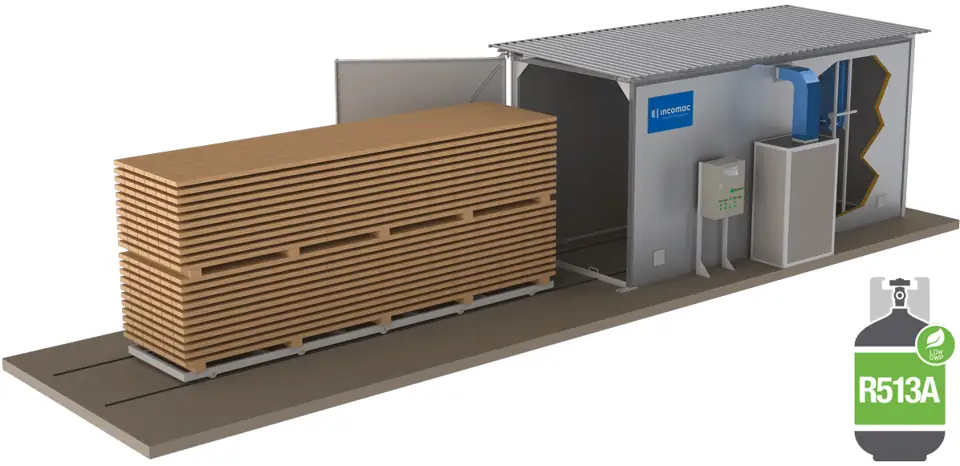
JUNIOR is a programme for smaller quantities of timber. The manufacturer envisages installation outdoors or inside the plant, including integration into the material flow. Loading options include rails and a trolley.
5, 10 and 20 m³ are the published classes of the JUNIOR programme. We match the net timber quantity, required clearances, connections and loading method to your stack.
HOW IS THE CHAMBER BUILT?
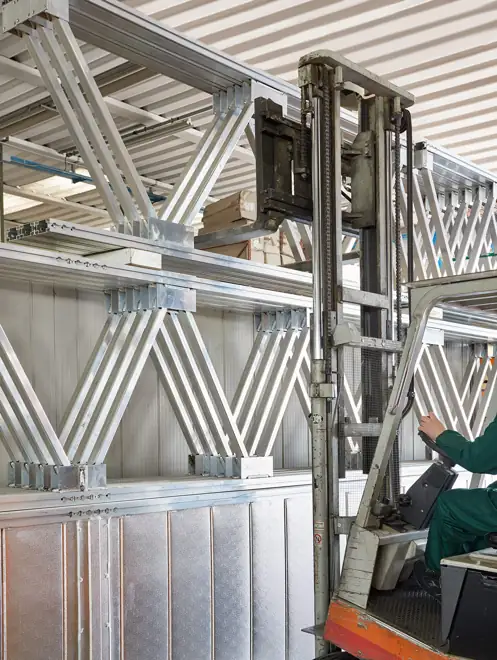
INCOMAC uses aluminium profiles and stainless steel fastening elements resistant to corrosion. The structure and equipment are adapted to the loads, temperatures and conditions at the installation site.
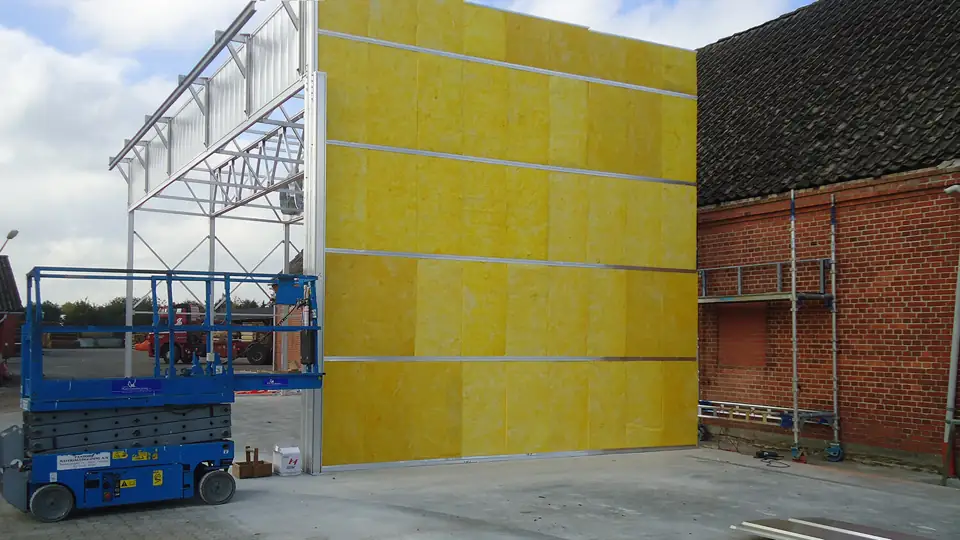
Modular panels with aluminium cladding and selected insulation reduce heat losses. Different types of insulation are available; the choice depends on process temperature, installation and other requirements.
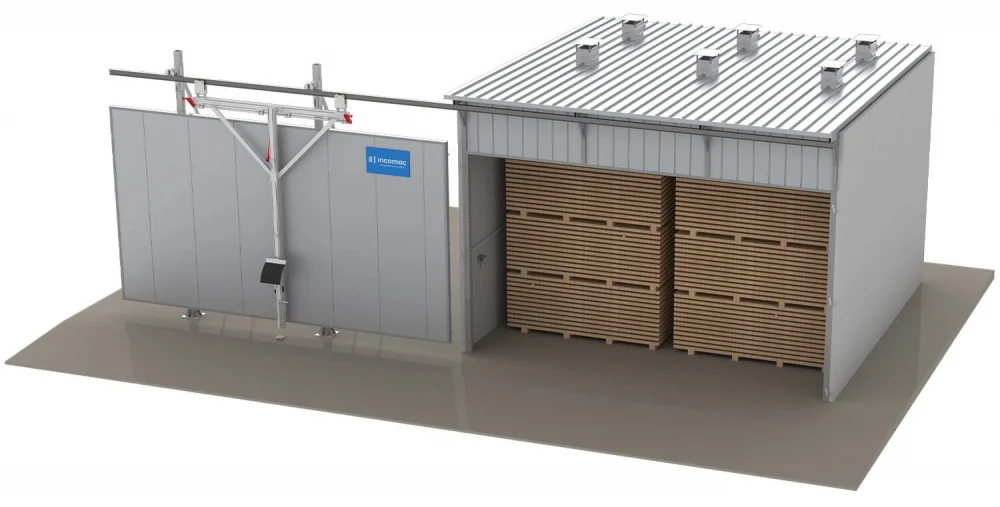
Front or tunnel loading, various door designs, and trolleys and rails. We choose a material path that makes sense for your plant.
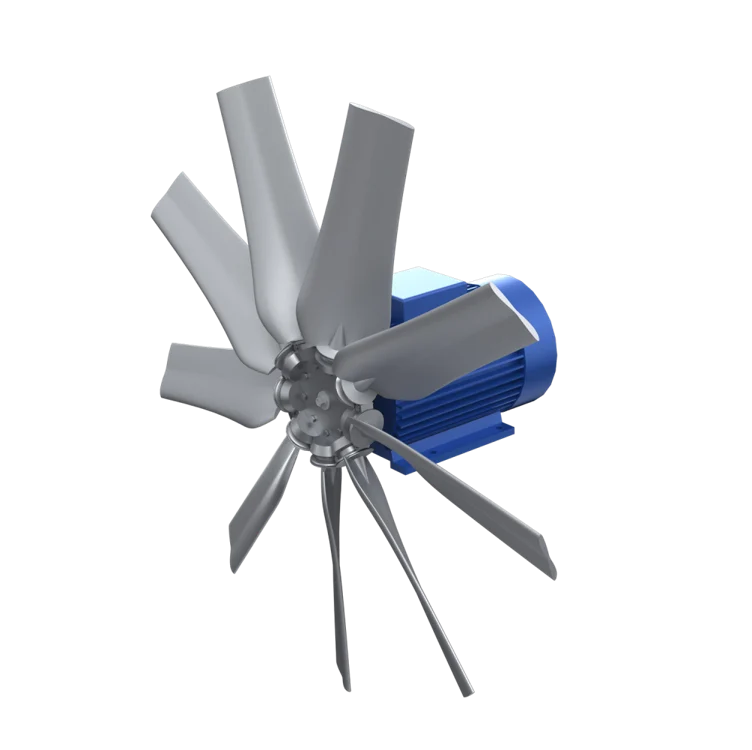
Fans, frequency converters and, if needed, high-pressure humidification adjust the climate. Functions and equipment size are determined according to the programme.
We check the available electricity, boiler room and possibilities for heat recovery. Connection to a solar power plant or other sources requires calculation of the complete installation.
SOFTWARE AND CONTROL
Sensors, controls and equipment work together. This illustrates a repeating control loop, not four drying phases.
Sensors monitor wood moisture and temperature. Measurements reach the controller and are related to the cycle state.
The controller compares measurements with the selected drying regime. The operator chooses a program for the timber and drying target.
Heating, ventilation and humidity control are adjusted as needed. Available components and moisture removal depend on the kiln type.
The operator monitors the state and measurement trends. New readings return to the control loop; the drying result is checked.
Based on measured humidity and temperature, the programme adjusts ventilation and the balance of operating and pause periods. Decisions are based on the state of the material, not just on identical time intervals for each batch.
The operator prepares the material and the programme, while the system carries out the control. We check the available functions for the selected control system.
The service programme includes remote diagnostics, support during cycles, training and production monitoring options. INCOMATH is the manufacturer's tool for benchmarking and consumption optimisation.
INCOMATH is not automatically included in every chamber. Access, licences, monitoring and the service package are part of the agreed solution.
INCOMAC · iDry and STOP & GO ↗ · Incotech · support and INCOMATH ↗
ENERGY EFFICIENCY
The heat pump uses the cold side to remove water and the hot side for heating. In air-exchange designs, recovery transfers heat from the outgoing air to the incoming air.
STOP & GO, efficient motors and frequency converters reduce unnecessary operation. Each option is selected according to the material and the process.
We compare consumption on a representative batch. INCOMAC offers analysis of electrical and thermal energy as well as monitoring of the effects of improvements.
For STOP & GO, INCOMAC states up to 50% electricity savings compared with a standard cycle, and for recovery up to 30% thermal energy savings. These are two different comparisons; the percentages are not added together. The result depends on the timber, weather, regime and equipment.
MAC EVO uses R513A refrigerant. The manufacturer compares its global warming potential with the previous R134a. This comparison of refrigerants does not mean the same percentage reduction in total consumption or all emissions of the drying kiln.
Manufacturer's explanation of efficiency ↗ · MAC EVO · technology development ↗
CATALOGUE AND VIDEO
Official INCOMAC presentation from 2026. It shows the system composition and the principle of condensation drying.
Open on YouTube ↗
Basic overview of the families, structure, additional equipment and control. The document shows the previous MAC generation; for MAC EVO, refer to the current description and video.
English / Polish · 2021 edition · 35 pages · 4.8 MBCurrent INCOMAC documentation ↗ · Current MAC EVO description ↗
To download the latest documentation from the manufacturer's website, their form is currently required. The basic publicly available catalogue with a clearly marked edition is available directly here.
CHOICE FOR YOUR WOOD
Tell us the wood species, dimensions, quantity per batch, initial and desired moisture content, and the available energy sources. On this basis we determine the most suitable technology, usable capacity and scope of control.
Enquire about INCOMAC ↗